
Commercial construction timelines are tighter than ever. Schedules are compressed, labor coordination is more complicated, and project teams are under constant pressure to keep work moving while managing safety, quality, and budget expectations.
But many project delays are not caused by major failures or a single missed deadline. More often, they come from the day-to-day realities of the job site itself. Crowded floors, material congestion, scheduling overlap, and crews waiting on access can quietly slow progress across an entire project.
For many site managers, the challenge is no longer simply getting work completed. It is keeping the job site organized and moving efficiently while multiple trades, deliveries, inspections, and schedule changes are all happening at once.
In 2026, experienced electrical contractors are playing a much larger role in helping projects stay efficient. Beyond installing systems, modern electrical teams are helping reduce congestion, improve coordination, and minimize avoidable slowdowns before they impact the schedule.
As an electrical contractor in North Carolina, we see these challenges across commercial job sites every day. Many of the biggest project slowdowns can often be traced back to a few common bottlenecks.
Bottleneck #1: When Every Trade Is Working in the Same Corridor
One of the most common frustrations on commercial job sites is trade stacking. Multiple crews are scheduled to work in the same area at the same time, all competing for access, equipment, lifts, storage space, and safe working conditions.
The slowdown compounds quickly once multiple trades begin working around one another. Productivity slows, communication becomes harder, and safety risks increase as crews work in tight corridors, overhead ceiling spaces, and active mechanical rooms. Crews waiting on lift access or workspace availability can create delays that ripple across multiple trades throughout the day.
On many projects, it is not unusual to see electricians, drywall crews, plumbers, and HVAC teams all trying to complete work within the same section of the building simultaneously. Even simple tasks can take longer when crews are constantly adjusting around one another.
Electrical work is especially affected by this challenge because traditional installation methods require a large amount of on-site labor during active phases of construction.
How Prefabrication Helps Reduce Congestion
This is one reason prefabrication has become increasingly valuable in commercial projects. Instead of assembling components entirely on-site, electrical assemblies can be built, organized, and tested in a controlled off-site environment before arriving ready for installation.
Reducing the amount of field assembly work helps minimize congestion on active floors and allows other trades to move more freely through the project. It also creates more predictable installation timelines and reduces the amount of rework caused by crowded job site conditions.
For project managers, fewer people working in the same space at the same time can make a meaningful difference in both productivity and site safety.
Bottleneck #2: Materials Arrive Before the Job Site Is Ready
Commercial job sites are rarely ideal environments for long-term material storage. Space is limited, conditions constantly change, and sensitive electrical equipment can sit exposed to dust, moisture, traffic, or accidental damage for weeks before installation.
As projects accelerate, site clutter often becomes its own coordination challenge. On many projects, materials are moved multiple times before they are ever installed simply to make room for other trades or changing schedules. A delivery arriving even a few days too early can create storage and coordination challenges for the remainder of the floor.
Electrical gear may arrive before installation areas are fully ready, creating constant reshuffling as crews work around deliveries, temporary storage areas, and incomplete spaces.
Experienced electrical contractors help reduce these delays by approaching material coordination strategically rather than treating delivery as a one-time event.
A Smarter Approach to Material Coordination
Instead of flooding the site with equipment weeks in advance, materials can be staged, prepared, and coordinated off-site before being delivered in phases aligned with the construction schedule.
This just-in-time approach helps keep work areas cleaner, reduces unnecessary handling of equipment, and gives project teams more flexibility as schedules shift throughout construction.
As commercial projects become more complex and timelines continue tightening, material coordination has become a much larger part of keeping projects efficient and organized. An experienced electrical contractor can help reduce delays caused by overcrowded staging areas, poorly timed deliveries, and constantly shifting schedules.
Bottleneck #3: Waiting for One Phase to Finish Before the Next Can Start
Traditional construction schedules often operate linearly. One phase must finish before the next phase can fully begin.
The challenge is that delays rarely stay isolated. If framing slips behind schedule, electrical rough-in may be delayed. If electrical work shifts, inspections and finishing trades may also be pushed back.
Small schedule changes can quickly create ripple effects across the entire project timeline.
As deadlines tighten, projects often try to recover lost time by compressing multiple trades into the same working window later in the schedule. That creates additional coordination pressure, increases congestion on-site, and can make quality control more difficult as crews work faster to stay on track.
Inspection scheduling can also become more complicated when timelines shift unexpectedly. A delay in one phase may impact multiple downstream approvals, forcing project managers to constantly adjust sequencing and manpower across the site.
For many commercial projects, the challenge is not simply one delayed activity. It is the cumulative effect of multiple schedule adjustments happening simultaneously across different trades and phases of construction.
Building Ahead Through Digital Planning
Modern electrical planning helps reduce some of this dependency by shifting portions of the work earlier in the process. Through BIM coordination, digital modeling, and advanced planning workflows, electrical assemblies can often be designed, organized, and prepared while portions of the structure are still being framed on-site.
Instead of waiting for every physical condition to be complete before work begins, portions of the electrical scope can move forward alongside construction progress.
For project managers, this creates opportunities to recover time, improve schedule predictability, and reduce the impact of delays that would traditionally stall downstream work.
It also highlights how the role of experienced electrical contractors continues to evolve. Electrical teams are increasingly involved in project coordination, planning, and schedule strategy long before installation begins on-site.
Why Efficient Coordination Matters More Than Ever
Many project slowdowns are not caused by one major issue. More often, they come from dozens of smaller inefficiencies that compound throughout construction.
Crowded work areas, poorly timed deliveries, constant material movement, and schedule dependencies can quietly drain productivity from a project even when every team is working hard to stay on track.
That is why modern commercial construction increasingly depends on contractors who understand how to improve overall job site coordination, not simply complete a scope of work.
Today, the most valuable electrical partners are helping projects move more efficiently as a whole. From planning and prefabrication to material coordination and schedule management, experienced commercial electrical teams are playing a larger role in keeping projects organized, productive, and moving forward.
WB Moore stands as a leading electrical contractor serving the Carolinas, providing an extensive array of services, such as Electrical Construction, Electrical Services, Low-Voltage, Engineering, Pre-Construction Services, and Special Projects, assuring the fulfillment of diverse project requirements. Our foremost commitment is to safety, evident through our unwavering dedication to rigorous safety training initiatives. Opt for WB Moore to access unmatched proficiency and tailored solutions that surpass your expectations.
All engineering work is performed in our Charlotte office. WBM Group, PLLC provides all standalone engineering services.
Top Safety Practices for Commercial Construction Job Sites
Learn how WB Moore is investing in workforce development, project management, field leadership, safety, and employee growth to build the future of electrical construction.

Growing Together: A Look at the Teams Driving WB Moore Forward
Learn how WB Moore is investing in workforce development, project management, field leadership, safety, and employee growth to build the future of electrical construction.
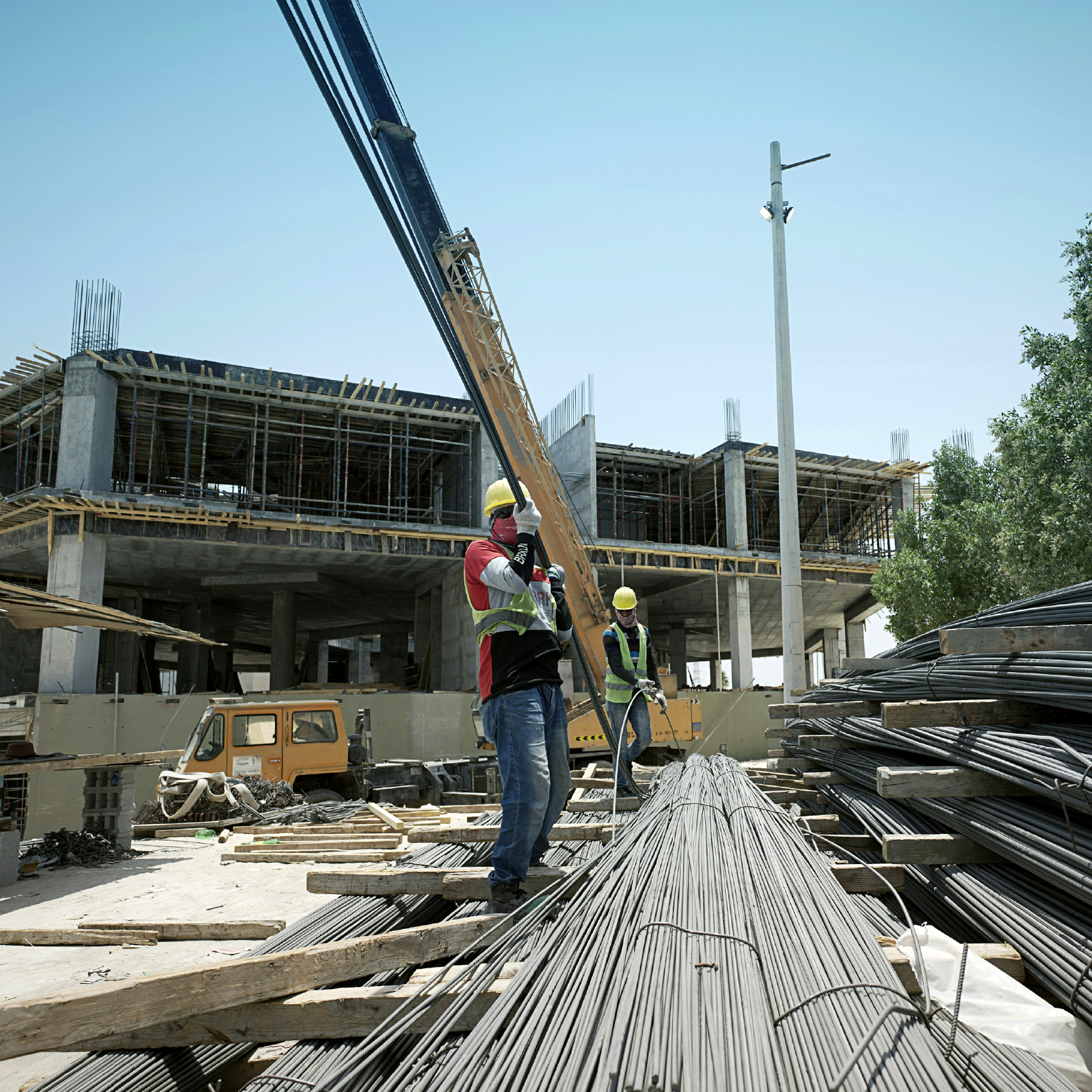
3 Job Site Bottlenecks Slowing Commercial Construction Projects
Many commercial construction delays come from everyday job site bottlenecks rather than major failures. Trade stacking, material congestion, and shifting schedules can all slow productivity across multiple teams. Crowded work areas and poorly timed deliveries create inefficiencies that ripple through the entire project. Modern electrical contractors are helping reduce these issues through better coordination, prefabrication, and early planning strategies that improve overall job site flow.

 916 N Poplar St, Charlotte, NC 28206
 (704) 331-9300
 info@wbmoore.com